


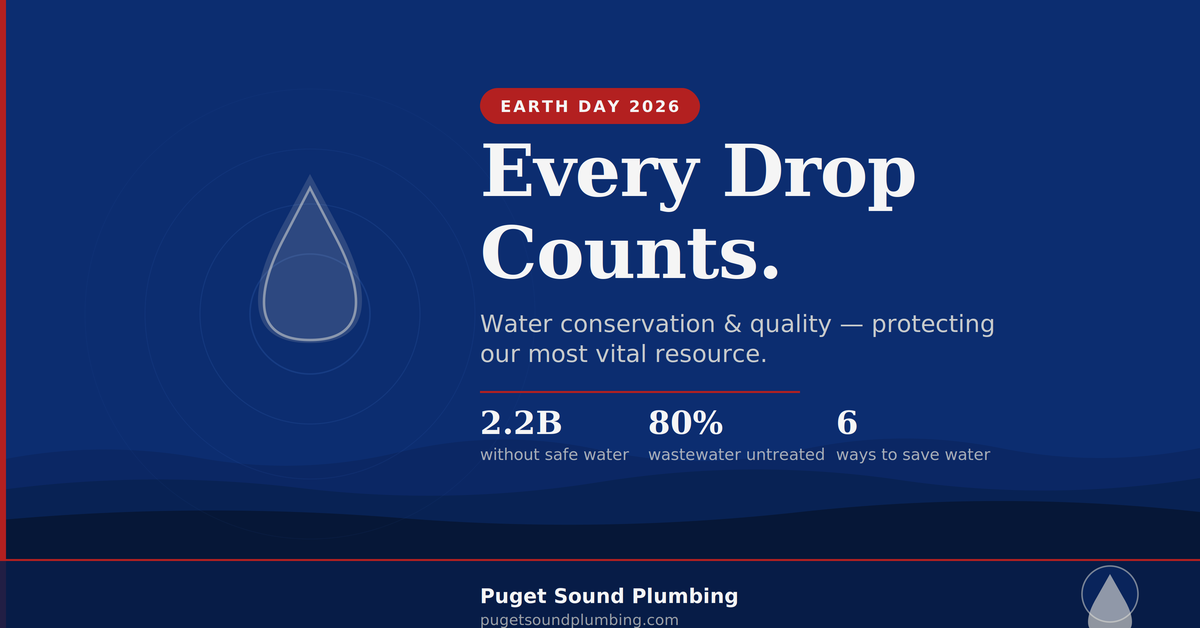
Earth Day and the Crisis We Can’t Ignore
Every April 22nd, billions of people around the world pause to reflect on the health of our planet. This Earth Day 2026, we want to talk about something that touches every living thing on Earth — water.
Water covers 71% of our planet’s surface, yet less than 3% of it is fresh water. Of that tiny fraction, most is locked away in glaciers or deep underground. What remains accessible to us — the water we drink, grow food with, and rely on every day — is finite, fragile, and under more pressure than ever before.
As a company dedicated to water quality and water conservation, Earth Day isn’t just a moment for us. It’s a mission. And this year, we want to share why protecting water matters more than ever, what’s threatening it, and — most importantly — what you can do about it.
Why Is Clean Water So Critical?
Water is not just a resource. It is the foundation of all life on Earth.
Clean, safe water supports human health, drives agriculture, powers economies, and sustains ecosystems. When water quality declines, everything suffers — from the fish in our rivers to the food on our plates to the health of communities worldwide.
Here are a few facts that put the scale of the challenge into perspective:
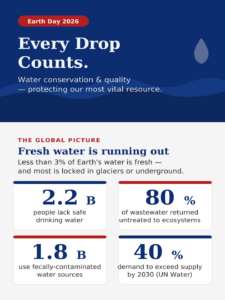
- 2.2 billion people currently lack access to safely managed drinking water (WHO, 2023)
- 80% of the world’s wastewater is returned to ecosystems without adequate treatment
- 1.8 billion people use a drinking water source contaminated with fecal matter
- Water demand is projected to exceed sustainable supply by 40% by 2030 (UN Water)
These are not distant statistics. They are the lived reality of people on every continent. And they are the reason why water conservation and water quality are at the heart of environmental action every Earth Day.
What Is Threatening Our Water Quality in 2026?
Understanding the threats is the first step toward addressing them.
Agricultural Runoff
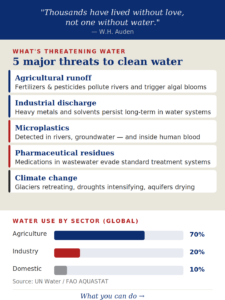
Agriculture accounts for roughly 70% of global freshwater withdrawals. When fertilizers, pesticides, and animal waste wash off farmland into waterways, they trigger algal blooms, dead zones, and contamination that can make water unsafe for drinking and harmful to aquatic life.
Industrial Pollution and Chemical Discharge
Factories, mining operations, and industrial facilities release heavy metals, solvents, and other toxic compounds into water systems. Even low concentrations of substances like lead, arsenic, or mercury can cause serious long-term health effects.
Microplastics
Microplastics have now been detected in rivers, lakes, ocean water, groundwater — and even in human blood. These tiny particles absorb other pollutants and enter the food chain, with consequences we are only beginning to understand.
Pharmaceutical Residues
Medications excreted by humans and animals, or improperly disposed of, are increasingly found in water systems. Conventional water treatment was not designed to remove many of these compounds, raising concerns about long-term ecosystem and human health impacts.
Climate Change
Perhaps the most systemic threat to water is climate change. Rising global temperatures are accelerating glacier melt, disrupting seasonal rainfall, intensifying droughts, and driving saltwater intrusion into freshwater coastal aquifers. Communities that have depended on predictable water cycles for generations are now facing deep uncertainty.
6 Science-Backed Ways to Conserve Water and Protect Water Quality
The good news is that solutions exist — at every scale. Here are six meaningful actions you can take, starting today.
1. Fix Leaks Promptly
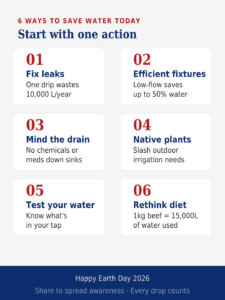
A single dripping faucet can waste more than 10,000 liters of clean water every year. A running toilet can waste up to 200 liters per day. Check your faucets, toilets, hoses, and pipes regularly — and fix any leaks as quickly as possible. It’s one of the highest-impact, lowest-effort water conservation actions available to any household.
2. Install Water-Efficient Fixtures
Low-flow showerheads, dual-flush toilets, and aerating faucets can reduce household water consumption by 20–50% without any change in behavior. Many utilities offer rebates for water-efficient appliances — check what’s available in your area.
3. Be Careful What Goes Down the Drain
One of the most important things you can do for water quality is to be mindful of what enters the water system from your home. Never pour medications, paint, motor oil, or household chemicals down the drain. Use phosphate-free cleaning products. Dispose of food waste in compost, not the sink.
4. Choose Water-Smart Landscaping
Outdoor watering can account for 30–60% of a household’s total water use. Choosing drought-tolerant, native plants for your garden dramatically reduces irrigation needs. Water early in the morning to minimize evaporation, and consider collecting rainwater for garden use where permitted.
5. Test Your Drinking Water
Knowing what’s in your tap water is the first step to protecting your family’s health. Home water testing kits can detect common contaminants like lead, nitrates, chlorine, and bacteria. If you’re on well water, annual testing is especially important. Understanding your water quality empowers you to choose the right treatment or filtration solution.
6. Reduce Meat and Dairy Consumption
Diet is one of the most powerful — and least-discussed — levers for water conservation. Producing 1 kg of beef requires an estimated 15,000 liters of water. Shifting toward plant-rich meals, even just a few times a week, can meaningfully reduce your personal water footprint.
The Role of Water Quality Monitoring and Technology
Individual action matters enormously, but systemic change requires better data, better technology, and better policy.
Modern water quality monitoring tools can detect contaminants at trace levels, providing early warnings before problems become crises. Smart irrigation systems use weather data and soil sensors to deliver precisely the right amount of water, eliminating waste at scale. Advanced filtration and treatment technologies can now remove pharmaceuticals, microplastics, and other emerging contaminants that older systems miss.
Innovation in this space is accelerating — and Earth Day is a good reminder of why that investment matters.
Frequently Asked Questions About Water Conservation
What is the single most effective thing I can do to save water at home? Fixing leaks is often cited as the most impactful and immediate step for most households. A leaking toilet or dripping faucet can waste tens of thousands of liters per year without being obvious.
How does water quality affect human health? Contaminated water is a leading cause of disease worldwide. Pathogens, heavy metals, nitrates, and chemical pollutants in drinking water are linked to a wide range of health conditions, from gastrointestinal illness to developmental issues in children to increased cancer risk with long-term exposure.
Is tap water safe to drink? It depends on where you live and the condition of your local infrastructure. In many developed countries, tap water meets strict regulatory standards. However, aging pipes, agricultural runoff, and emerging contaminants mean that even treated tap water can contain trace substances. Testing your water is the best way to know for certain.
What is the connection between climate change and water scarcity? Climate change disrupts the water cycle by altering precipitation patterns, accelerating glacier melt, and increasing evaporation. This leads to more intense droughts in some regions and more severe flooding in others — both of which threaten freshwater availability and quality.
How can I get involved beyond my household? Support organizations working on water access and quality. Advocate for strong water protection policies at the local and national level. Attend watershed restoration events in your community. And choose products and services from companies that prioritize responsible water use.
Conclusion: Every Day Should Be Water Day
Earth Day gives us a shared moment to reflect — but the commitments we make on April 22nd are only meaningful if they carry through to April 23rd, and every day after that.
Water is life. It is the element that connects every person, every ecosystem, and every living thing on this planet. Protecting it is not a sacrifice. It is an investment in the world we all share.
This Earth Day, we invite you to take one action — fix a leak, test your water, plant a native shrub, or simply learn more about where your water comes from and where it goes. Because every drop truly does count.